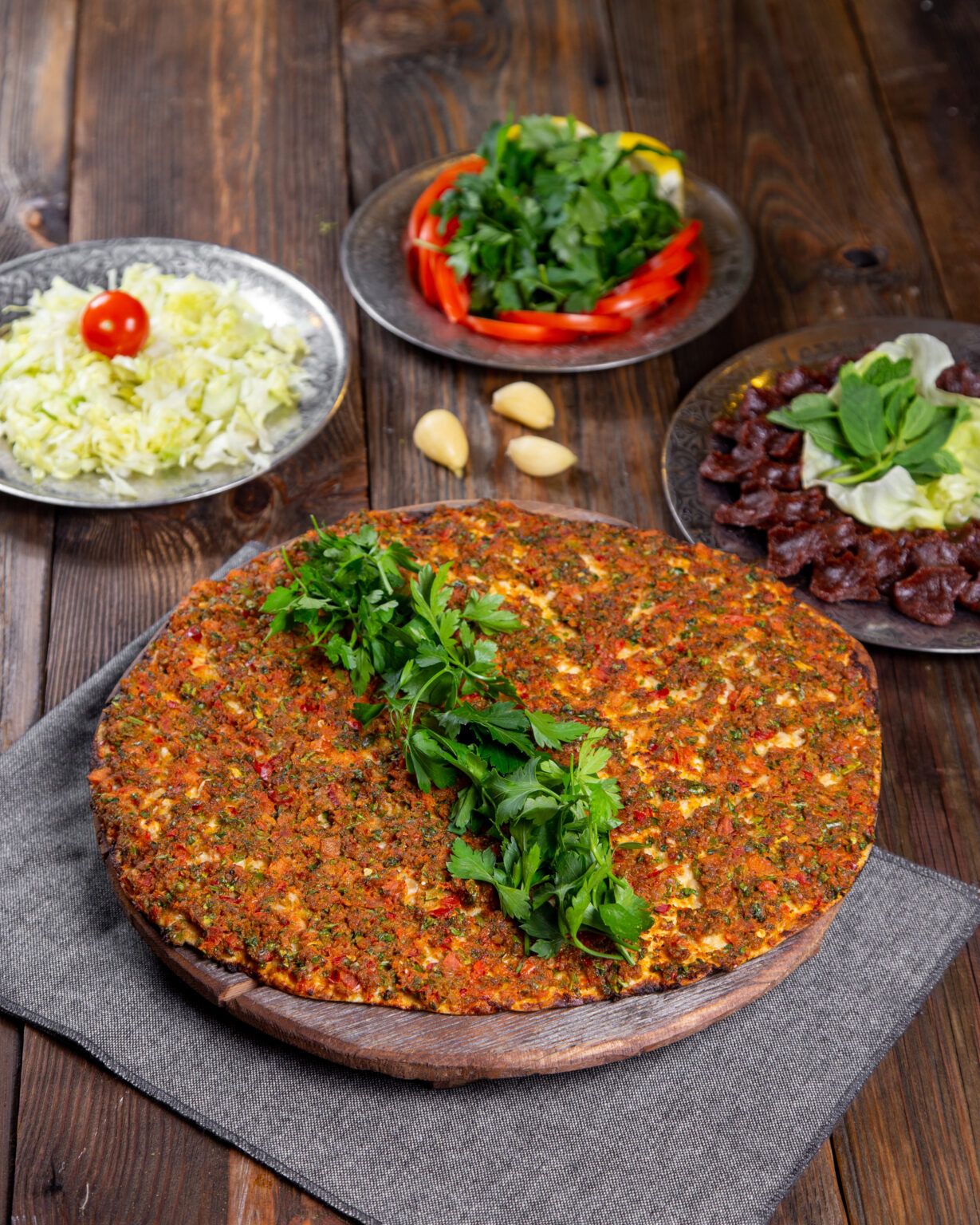
Gaziantep kebabs is the common name for the kebabs of Gaziantep cuisine cooked on skewers and over embers. The list of the Gaziantep Provincial Directorate of Culture and Tourism names more than thirty kebabs, and most of them are made with mutton minced by hand with a zırh knife. Nine kebabs are registered in Gaziantep's name at the Turkish Patent and Trademark Office: ali nazik, altı ezmeli, cağırtlak, küşleme, garlic, simit, loquat, keme and vegetable kebab. The registration documents require every stage of producing a kebab sold under these names to take place in Gaziantep. The most distinctive feature of Gaziantep kebabs is that vegetables or fruit go on the same skewer as the meat, as in garlic, loquat and keme kebab. Some kebabs depend on the season: garlic kebab is made for only 3-5 weeks a year, keme kebab between March and June. This is also where they differ from Adana kebab, because the registered recipe of Adana kebab has no vegetables or black pepper.
What are the kebabs of Gaziantep?
Gaziantep kebabs fall into three groups: minced and cubed meat kebabs, kebabs with vegetables and fruit, and whole-cut meat kebabs such as küşleme. The dish list of the Provincial Directorate of Culture and Tourism names more than thirty kebabs from these groups.
The list includes ali nazik, altı ezmeli with minced or cubed meat (tike), quince kebab, cartlak, liver, apple kebab, keme kebab, minced meat kebab and grilled cutlets. Eggplant, garlic, simit, vegetable, onion, sour cherry, loquat and yogurt kebab are on the same list. On December 11, 2015, Gaziantep joined the United Nations Educational, Scientific and Cultural Organization (UNESCO) Creative Cities Network for its cuisine.
Which Gaziantep kebabs are registered?
At the Turkish Patent and Trademark Office, 9 kebabs are registered in Gaziantep's name: eight registrations with "kebab" in their name, plus ali nazik, registered as Alenaziği. All of them are designations of origin. The registration documents require every stage of producing a kebab sold under these names to take place in Gaziantep.
| Kebab | Made with | Registration |
|---|
| Ali nazik (Alenaziği) | Charcoal-grilled minced or cubed meat on roasted eggplant, strained yogurt and garlic | No 748, 2021 |
| Altı ezmeli kebab | Charcoal-grilled cubed or minced meat on a mash of roasted tomato and green pepper | No 873, 2021 |
| Cağırtlak (cartlak) kebab | Liver, heart, kidney and lung threaded on one skewer with fat | No 840, 2021 |
| Küşleme kebab | Lamb tenderloin, with only salt and olive oil | No 664, 2021 |
| Garlic kebab (sarımsak) | Fresh garlic bulbs and minced mutton on the same skewer, rested in steam after cooking | No 592, 2020 |
| Simit kebab | Mutton minced with a zırh knife and fine bulgur | No 729, 2021 |
| Loquat kebab (yenidünya) | Loquat fruit and minced mutton | No 743, 2021 |
| Keme kebab | Keme (desert truffle) and minced or cubed mutton | No 758, 2021 |
| Vegetable kebab (sebzeli) | Meat minced with a zırh knife together with parsley, garlic and red pepper | No 1015, 2022 |
Eggplant kebab, onion kebab and pistachio kebab, on the other hand, are not on the Turkish Patent and Trademark Office's Gaziantep list.
Which Gaziantep kebabs have vegetables and fruit?
The registered kebabs with vegetables and fruit are garlic, loquat and keme kebab. The registration documents state that in these three kebabs the vegetable or fruit goes on the same skewer as the meat.
In garlic kebab, fresh garlic bulbs cut in half alternate on the skewer with walnut-sized pieces of minced meat. The skewers cook over a gentle fire and then rest in steam with a finger's depth of water for 20-25 minutes. The garlic cloves must be juicy and their center not yet woody. That is why garlic kebab can be made for only 3-5 weeks a year.
In loquat kebab, the thin-skinned, tart loquat is halved, the pit is removed and balls of minced meat go between the halves. The kebab is made between May and mid-June, when loquats grow in Gaziantep, and it is cooked on a charcoal grill or on a tray in the oven.
The mushroom of keme kebab, a desert truffle, is also known in other regions as yeryaran, domalan and tumalan, and it comes up from the soil by itself in spring. The truffle and the minced or cubed meat are threaded on the same skewer and cooked on a charcoal grill. Because keme is found only between March and June, the kebab is made in those months too.
Kebabs with vegetables and fruit that have no registration document are also part of Gaziantep cuisine. The provincial culture directorate's list also includes eggplant kebab, onion kebab, quince kebab, apple kebab and sour cherry kebab. In quince kebab, halved and hollowed quinces are filled with lamb, and the kebab is cooked with a pomegranate sour sauce in the oven or over a wood fire. Autumn and winter, the quince season, are this kebab's season too.
Which Gaziantep kebabs are made with minced and cubed meat?
The registered kebabs made with minced and cubed meat are ali nazik, simit kebab, altı ezmeli and cağırtlak kebab. In all four, the meat cooks on a skewer over a charcoal grill.
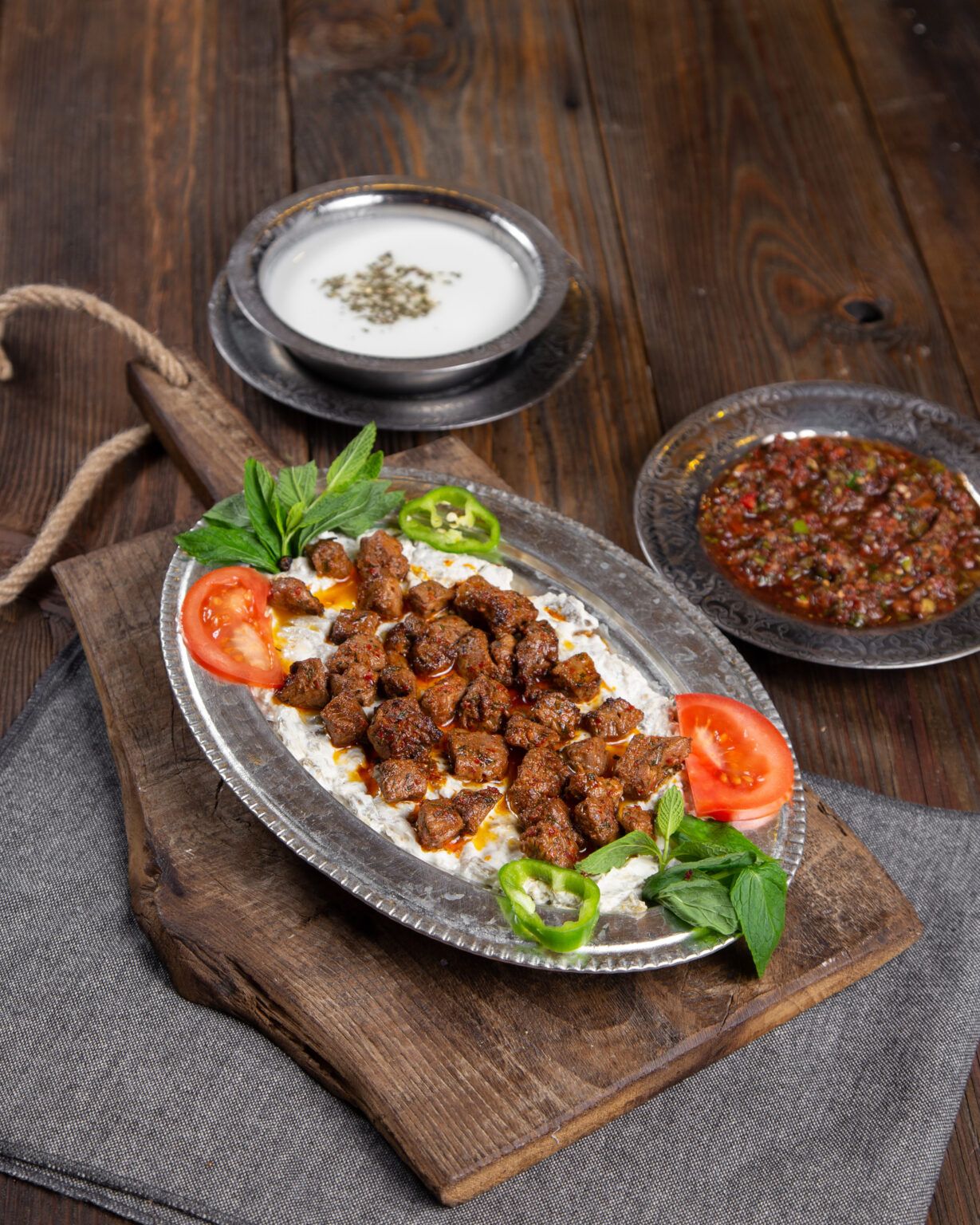
Ali nazik has been registered as Gaziantep Alenaziği since 2021. In the registered recipe, roasted seedless eggplant is chopped and warmed gently with strained yogurt and garlic in a tin-lined copper pan. Charcoal-grilled minced or cubed meat goes on top, followed by clarified butter or butter with ground red pepper. In the home recipe on Kültür Portalı, by contrast, the eggplant is pounded into a mash and the minced meat is browned in clarified butter.
In simit kebab, fine bulgur soaked in lukewarm water is mixed into mutton minced with a zırh knife. In Gaziantep, fine bulgur is called simit, and the bulgur used is the registered Antep Bulguru. Dried garlic, ground red pepper, cumin and black pepper go into the mixture, with dried mint and pine nuts if you like.
In altı ezmeli kebab, roasted tomatoes are peeled and crushed with a wooden mallet, and finely chopped green pepper is added on top. Charcoal-grilled cubed or minced meat goes on the hot mash, and it is served with parsley.
In cağırtlak kebab, liver, heart, kidney and lung are cut small and threaded on the same skewer with fat. In Gaziantep's Tabakhane quarter, there have long been shops that make only liver and cağırtlak kebab.
What is küşleme kebab?
Küşleme kebab is the tenderloin from either side of the lamb's spine, cooked over embers with salt and olive oil. A lamb yields only two pieces of küşleme, each about 17-18 centimeters long and weighing 150-200 grams.
The registered recipe uses no spices. The meat is marinated in large pieces with salt and olive oil and cooked medium over flameless embers. The registration document describes küşleme as an extremely tender meat because it has no fat or sinew.
How is kebab made in Gaziantep?
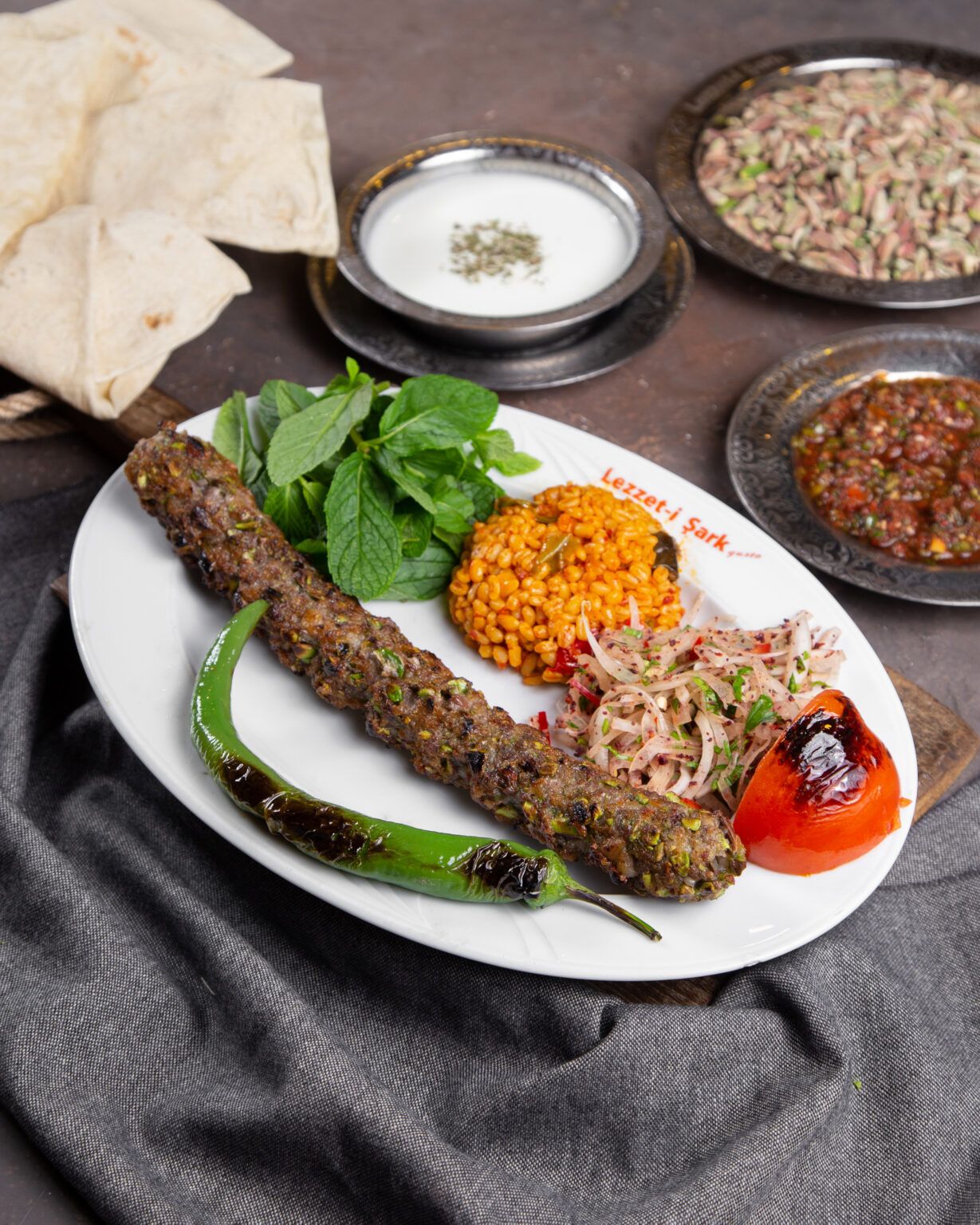
In Gaziantep, kebab is made from mutton minced with a zırh knife, on square skewers, over charcoal once its fierce heat has died down. The recipes in the registration documents share a common method.
- The meat is mostly mutton. The recipes for vegetable, loquat and keme kebab use mutton brisket.
- The meat is minced with a sharp knife called a zırh.
- The skewers are square, and the minced meat is shaped by pressing it onto the skewer by hand.
- The fire is charcoal. The skewers go on once the grill's fierce heat has passed and are turned often in the same direction.
- They come with thin pide, an onion and parsley salad, roasted tomatoes and peppers.
How is Gaziantep-style eggplant kebab made?
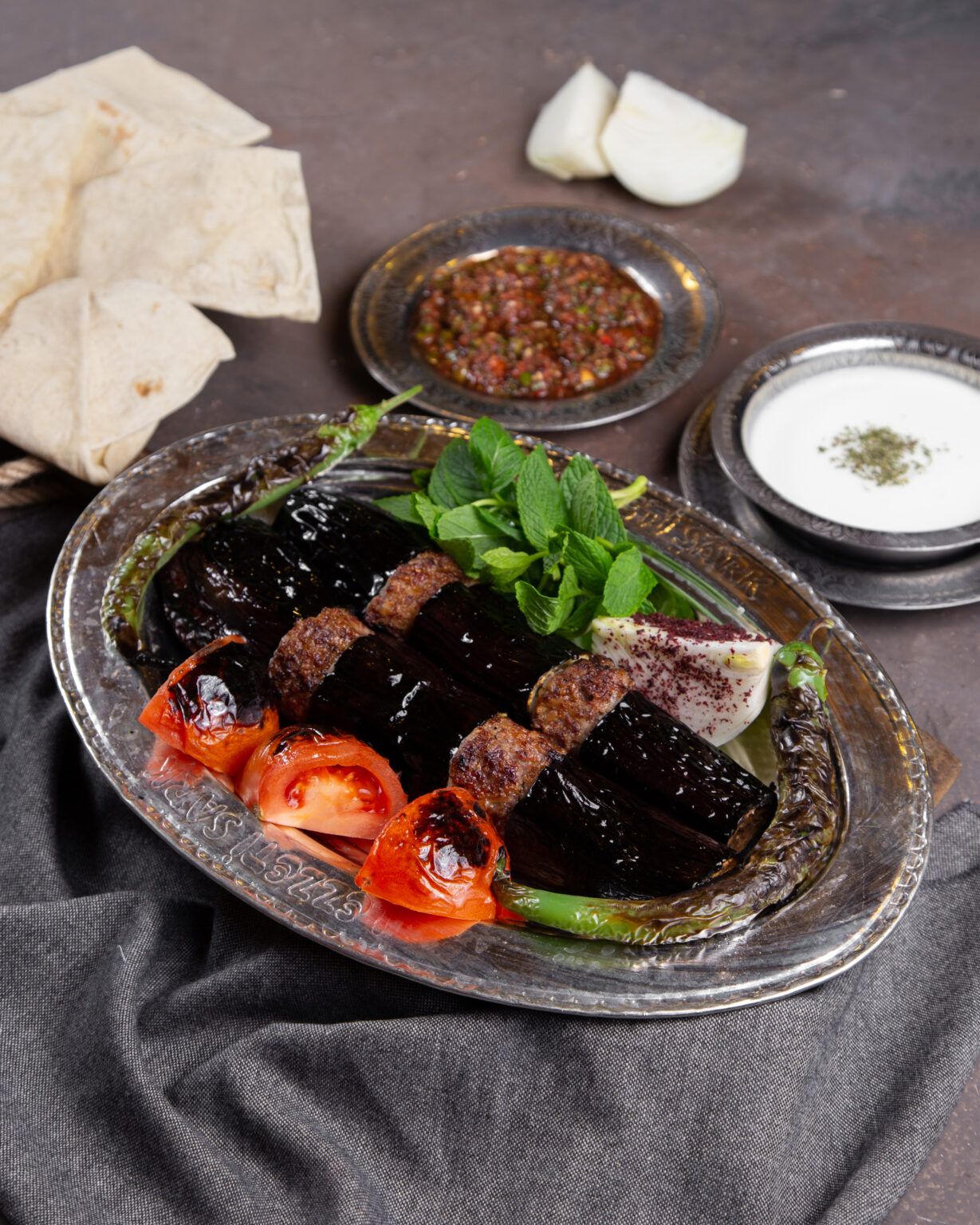
In Gaziantep-style eggplant kebab, thick slices of eggplant and meatballs alternate on a skewer or on a round tray, and they cook together over embers or in the oven. The eggplant is often the kemer variety, cut with its skin into large rings. Little spice goes into the meatballs; most recipes make do with salt and black pepper.
On the skewer, the eggplant takes on the smoke of the embers and the meatball takes on the eggplant's juices. In the tray version, tomatoes and green peppers go between them and the kebab bakes in the oven with a little water. Lavash or tırnaklı pide is dipped into the juices at the bottom of the tray. Roasted eggplant is also in ali nazik, but eggplant kebab uses no yogurt, and the eggplant cooks with the meatballs without being mashed.
How is Gaziantep-style onion kebab made?
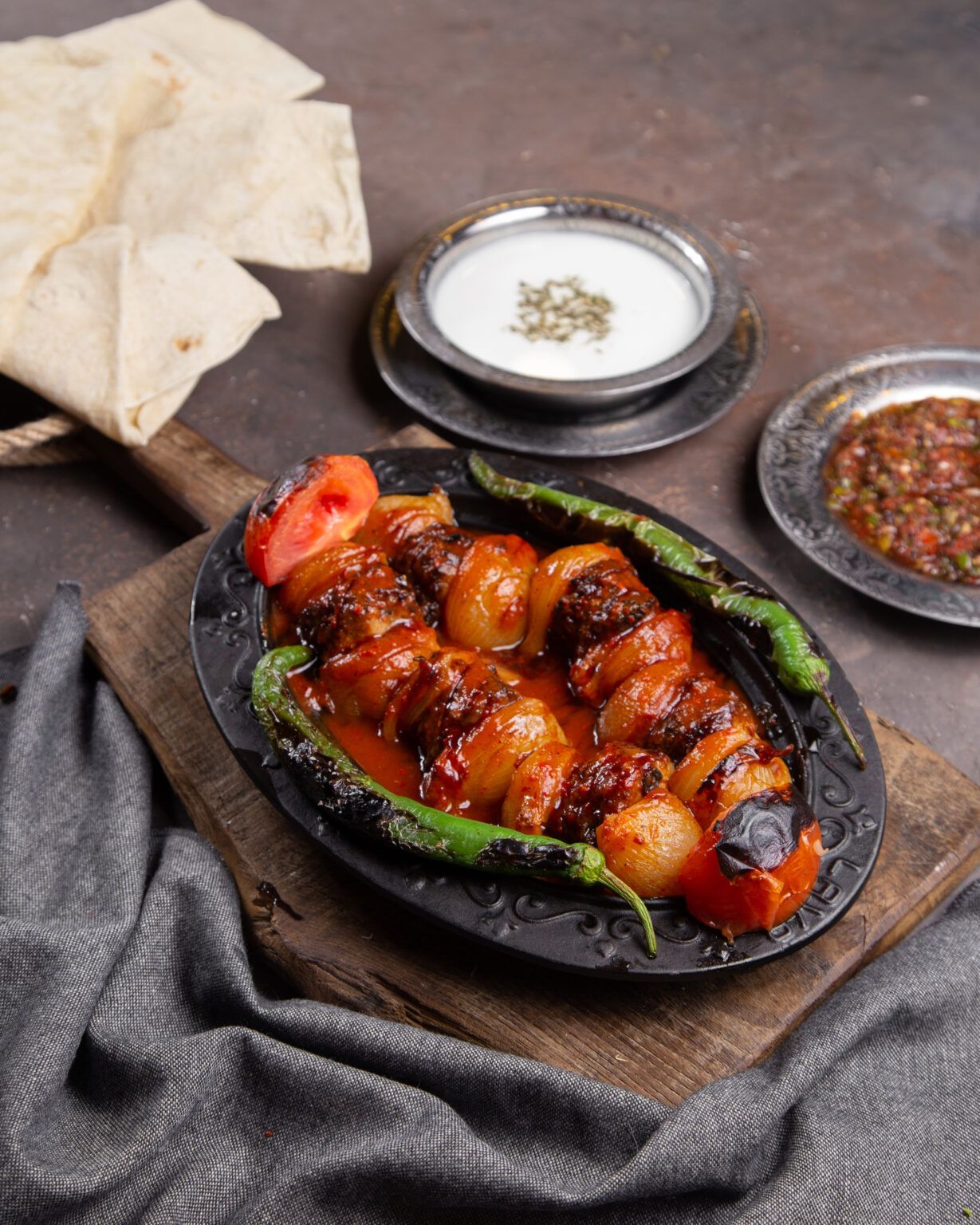
In Gaziantep-style onion kebab, small dry onions and meatballs alternate, and the kebab cooks in a sauce with pomegranate molasses. The basic ingredients are minced meat, small dry onions, pomegranate molasses, salt and black pepper.
The onions are peeled and, in most recipes, used whole. They are grilled on skewers with the meatballs, or arranged on a tray and baked with pomegranate molasses and water. Some recipes add pepper paste to the sauce. As it cooks, the onion softens, loses its sharpness and takes on a sweet and sour flavor from the pomegranate molasses. Like Gaziantep's other kebabs, onion kebab is eaten with lavash and an onion and parsley salad.
What is the difference between Gaziantep kebab and Adana kebab?
The difference between Gaziantep kebab and Adana kebab is that Adana kebab is a single recipe, while Gaziantep kebabs are a family. For Adana kebab, the meat comes from a male sheep at least one year old and is minced with a zırh knife, with tail fat if needed.
Only ground red pepper and salt go into Adana kebab, with chopped fresh red pepper if you like. Tomato paste, vegetables, black pepper and suet are not used. The skewer cooks over flameless, glowing charcoal, without a fan.
In Gaziantep's kebabs, by contrast, vegetables and fruit often go on the same skewer as the minced meat. In vegetable kebab, parsley, garlic and red pepper are minced together with the meat. In garlic, loquat and keme kebab, the vegetable or fruit alternates with the meat.
The scope of the registrations also differs. The registration of Adana kebab states that it may be produced in other regions as long as the specified properties are followed. Gaziantep's registered kebabs, however, require production to take place entirely in Gaziantep.
Where can you eat Gaziantep kebabs in Istanbul?
In Istanbul, Gaziantep kebabs are served in restaurants that offer Gaziantep cuisine. In Başakşehir, one of them is Lezzet-i Şark Gusto, beneath Fatih Terim Stadium at Block C No: 5. Ali nazik, onion kebab, eggplant kebab, pistachio kebab, altı ezmeli and küşleme are cooked on Gusto's grill.
The menu also has Adana and Urfa kebab made with meat minced by hand with a zırh knife. For large tables, different kebabs come together on one tray as mixed kebab at our kebab grill in Başakşehir. Gusto is open every day until midnight, and until 01:00 on Fridays and Saturdays. Current prices, with their date, are on our menu page.