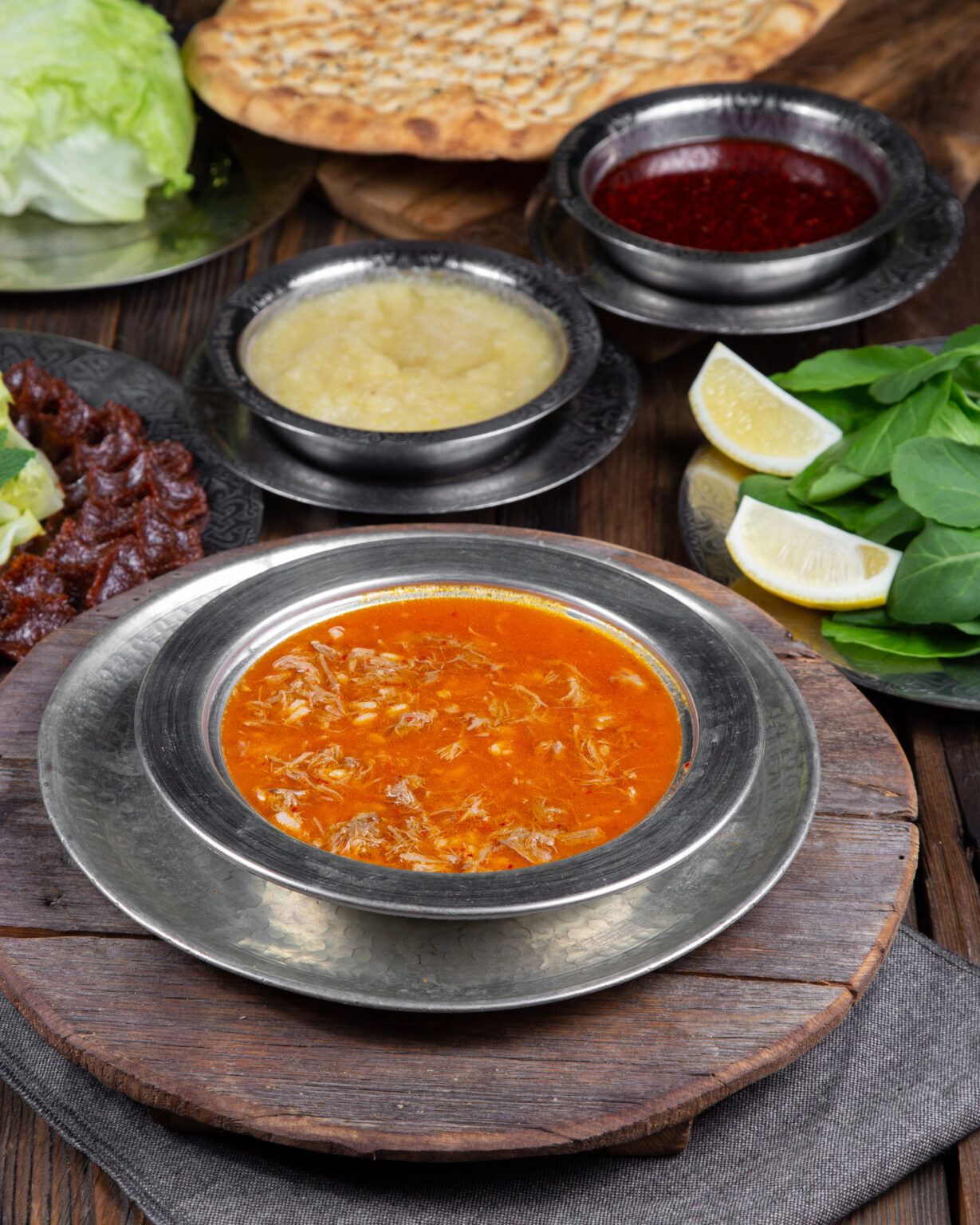
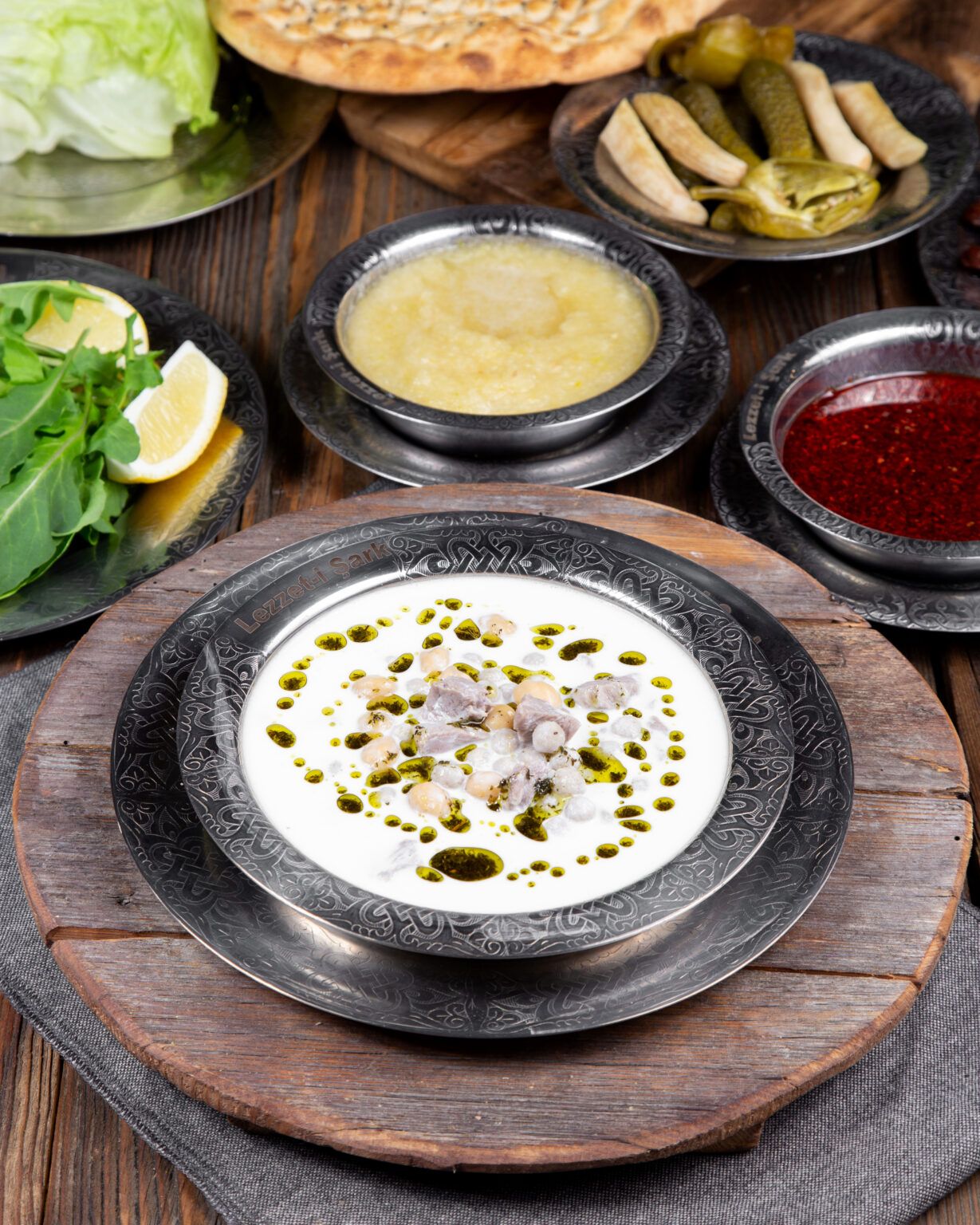
Beyran is a regional dish from Gaziantep made with sheep meat, rice and broth. In the registered recipe, the meat comes only from the shoulder and neck of the sheep and cooks with marrow bones for at least 10-12 hours over a low flame. The cooked meat is pulled into shreds, laid on unsalted boiled rice in a copper pan and brought to a boil over a high flame with crushed garlic, red pepper flakes and broth. The pan arrives at the table boiling. Though it is eaten with a spoon, the meat and rice make beyran a meal on its own. The name Antep Beyranı has been registered at the Turkish Patent and Trademark Office since 2017, under number 207. In Gaziantep, beyran is eaten mostly on winter mornings, at breakfast.
What is beyran soup?
Beyran is a regional dish of meat and rice from Gaziantep. The registration record at the Turkish Patent and Trademark Office defines beyran with this sentence and classifies it as a regional dish, not as a soup. It is eaten with a spoon, but the meat and rice in it make it a meal on its own.
Three things set beyran apart from similar dishes: sheep meat cooked for hours, rice boiled without salt or fat, and a service finished in a copper pan over a high flame. The registration record also notes that beyran is very laborious to make and that production technique and skill are among the most important factors in it.
Which cut of meat is used in beyran?
The meat in beyran comes only from the shoulders and neck of the sheep. It cooks together with plenty of marrow bones, and the body of the broth comes from these bones.
The registration document also describes the animal: a male sheep under one year old or a female sheep that has never given birth. Well-fed animals have fattier, more tender meat, which is why this meat is chosen for beyran.
Turkish Wikipedia's article on beyran also lists cheek meat. The registered recipe, however, uses only shoulder and neck meat and has no place for offal.
What is in beyran?
Beyran contains sheep meat, unsalted boiled rice, garlic, red pepper flakes, black pepper and broth. One portion of beyran in the registered recipe contains the following.
- 50-70 grams of cooked, shredded sheep meat
- 50-70 grams of rice boiled without salt or fat (called kel pilav)
- 8-12 grams of garlic
- 10-15 grams of red pepper flakes
- 3-5 grams of black pepper
- Broth, as much as you like
- Lemon and salt, to taste
- For a fat-lined base, 10-15 grams of fat in the bottom of the pan
To flavor the broth, one or two peeled onions go into the pot, along with a whole lemon that is taken out later. Sheep suet also enriches the broth. The recipe has no tomato paste, flour or yogurt.
How is beyran cooked?
The meat and marrow bones of beyran cook in a copper cauldron over a low flame for at least 10-12 hours, and the service is finished in a copper pan over a high flame. That is why beyran is started a day ahead.
To keep the broth clear, the meat and marrow bones soak in water for one to three hours, and the water is changed several times. They are then boiled in the copper cauldron, and the foam that gathers on the surface, called kef, is skimmed off with a slotted spoon. Minced suet, salt, onion and lemon go into the cauldron, the lid goes on and the meat is left to cook over a low flame.
While still hot, the cooked meat is pulled apart, with the sinew and fat removed, and the rice is boiled separately until just tender. Each portion is served one by one. The copper pan is held with tongs over a high flame, and the rice and meat go in. Then crushed garlic and red pepper flakes are added and the broth is poured over. In the version with a fat-lined base, the fat at the bottom of the pan is already hot and flares up the moment the broth touches it. In the Antep dialect, the two styles are called dabanı yağlı and dabanı yağsız: with and without a fat-lined base.
Where is beyran from?
Beyran is a dish of Gaziantep. The first beyran shop opened in the Gaziantep bazaar in 1885, and the commercial making of beyran dates back to that year.
The name Antep Beyranı is protected: it is a designation of origin registered at the Turkish Patent and Trademark Office under number 207. The Gaziantep Metropolitan Municipality applied on May 8, 2015, the indication was published in the Official Gazette on April 10, 2016, and it was registered on January 13, 2017. Its geographical boundary is the province of Gaziantep, so every stage of producing beyran under this name must take place in Gaziantep. Compliance is inspected by a three-member board of representatives from the municipal police, the provincial agriculture directorate and the chambers of tradesmen, regularly once a year and at any time when there is a complaint.
When do people eat beyran?
In Gaziantep, beyran is eaten mostly on winter mornings, at breakfast. It is one of the city's winter breakfasts and is eaten before going to work. Because the cauldron is set up the night before, the meat is ready by morning.
What is the difference between beyran and kelle paça?
The difference between beyran and kelle paça lies in the meat: beyran is made from the shoulder and neck of the sheep, kelle paça from the animal's head and feet. The Turkish Language Association's dictionary defines kelle as the cooked head of a sheep, lamb or goat, and paça as the feet of a slaughter animal and the soup made from them.
Beyran uses neither head nor feet. It comes in a copper pan with rice, garlic and red pepper flakes.
Where can you eat beyran in Istanbul?
In Istanbul, beyran is served in restaurants that offer Gaziantep cuisine. In Başakşehir, one of them is Lezzet-i Şark Gusto, beneath Fatih Terim Stadium at Block C No: 5. At Gusto, beyran is served every day until midnight, and until 01:00 on Fridays and Saturdays, and the restaurant has free parking.
You can order beyran as a full or small portion. Our kitchen is open every day for anyone looking for late-night beyran in Başakşehir. Alongside beyran, the menu also has kelle paça, bone marrow soup, yuvalama and lentil soup. Current prices, with their date, are on our menu page.